


The Question Every Business Owner Asks After a Failed Offshore Experiment
“Why do so many offshore teams fail, even when we hire good people?”
If you’ve ever worked with an offshore or remote team that didn’t live up to expectations, you’ve probably asked yourself this question. Maybe multiple times. Perhaps while staring at yet another missed deadline, reviewing work that somehow missed the mark entirely, or realizing that a project you thought was 80% complete is actually closer to 30%.
It’s frustrating. It’s expensive. And worst of all, it makes you question whether offshore teams can ever really work for your business.
But here’s what most business owners don’t realize: the problem usually isn’t the team you hired. It’s something much more fundamental—and much more fixable.
The Real Reason Most Offshore Teams Struggle
After working with countless companies who’ve had both successful and disastrous experiences with offshore teams, we’ve identified a pattern that explains almost every failure. And it’s not what most people expect.
Most offshore teams don’t fail because of talent issues. They don’t fall short because the people aren’t smart enough, dedicated enough, or skilled enough to do the work. In fact, many of the offshore professionals we’ve worked with are exceptionally talented—often more experienced and educated than their domestic counterparts, and at a fraction of the cost.
So if it’s not about talent, what is it?
They fail because there’s no structure holding the work together.
Think about what “structure” actually means in a business context. It’s the invisible framework that makes everything run smoothly. It’s knowing who does what, when they do it, how they do it, and what “done” actually looks like. It’s the difference between a team that operates like a well-oiled machine and one that constantly needs someone to step in and figure out what’s happening.
When that structure is missing, everything becomes harder. And when your team is working remotely—especially across different time zones and cultures—those cracks in your foundation become canyons.
What Happens When Structure Is Missing
Let’s walk through what a typical day looks like in an offshore team that lacks proper structure. You’ll probably recognize some of these scenarios:
Roles Are Unclear
Sarah in your offshore team thinks she’s responsible for quality checking the designs before they go to the client. But Miguel, who’s also on the team, assumes that’s his job. Meanwhile, the team lead thought you were handling that part.
The result? Sometimes all three people review the same work (wasting time), sometimes nobody does (leading to errors reaching the client), and most often, people are stepping on each other’s toes while critical gaps go unfilled.
Nobody is intentionally dropping the ball. They’re all trying their best. But when roles aren’t crystal clear, even the most dedicated team members end up working at cross-purposes.
Outcomes Aren’t Defined
Your offshore developer finishes a feature and marks it as “complete.” But when you review it, you realize it doesn’t include the error handling you expected, the mobile responsiveness isn’t quite right, and the loading time is slower than acceptable.
Were they being lazy? Probably not. More likely, “complete” meant something different to them than it did to you. Without clearly defined outcomes—what does “done” actually look like?—everyone is essentially guessing at the target.
This is especially problematic across cultures and languages, where assumptions about quality, completeness, and expectations can vary significantly. What seems obvious to you might not be obvious to someone who comes from a different professional background or training.
Feedback Only Happens When Something Breaks
In many offshore team setups, communication follows a pattern: silence means everything is fine, and you only hear from people (or reach out to them) when there’s a problem.
This reactive approach to feedback creates a toxic dynamic. Team members never know if they’re on the right track until something goes wrong. There’s no opportunity for course correction, no chance to catch small issues before they become big ones, and no positive reinforcement when things are going well.
The result? Work becomes entirely reactive. People are always putting out fires instead of preventing them.
Tasks Get Done, But Ownership Is Missing
Here’s one of the most frustrating patterns we see: tasks do get completed. The checklist gets checked off. But somehow, the overall project still feels like it’s not moving forward the way it should.
Why? Because ownership is missing.
Ownership is different from just doing tasks. It means someone understands the bigger picture, anticipates problems before they happen, takes initiative to improve processes, and feels personally responsible for outcomes—not just outputs.
When you have task-doers instead of owners, work happens in a vacuum. People complete their assigned items without thinking about how those items connect to the larger goal, whether the approach makes sense, or if there’s a better way to accomplish the objective.
When Problems Show Up, No One Knows Who’s Responsible
Something goes wrong with a client project. Maybe a deadline was missed, or a deliverable doesn’t meet expectations, or a communication got dropped somewhere along the way.
You need to figure out what happened so you can fix it and prevent it from happening again. But when you start asking questions, you hit a wall. Everyone thought someone else was handling it. Or multiple people were involved, but nobody was ultimately responsible. Or the hand-off between team members somehow got lost in translation.
Without clear ownership and accountability, post-mortems become finger-pointing exercises, and the real issues—the structural problems that allowed the failure to happen—never get addressed.
The Distance Factor: Distance Doesn’t Create Problems, It Exposes Them
Here’s something crucial to understand: distance and remote work don’t create these structural problems. They simply expose them and make them more visible and more costly.
Think about it this way: if you have an in-office team and roles are somewhat unclear, you can usually muddle through. Someone walks over to someone else’s desk, they have a quick conversation, and ambiguity gets resolved in real-time. The lack of structure is still there, but proximity allows you to paper over it with constant informal communication.
But when that same team is distributed across different cities, countries, or time zones, those quick hallway conversations can’t happen. The question that would take 30 seconds to answer in person now requires an email or Slack message, which might not get answered for hours—or until the next day if time zones are significantly different.
Any weakness in your processes becomes dramatically more visible when teams are remote. The gaps that you could bridge with casual conversation suddenly become chasms that slow everything down.
This is actually good news, because it means the problem is fixable. The issue isn’t that remote work or offshore teams are inherently flawed. The issue is that they require you to have the structure that every team should have anyway—they just make it impossible to avoid building that structure.
Why Adding More People Doesn’t Fix the Problem
When an offshore team isn’t performing, the first instinct is often to add more people. “If three developers aren’t getting it done, let’s hire two more.” “If the work isn’t happening fast enough, we need more hands.”
But if the underlying structure is broken, adding more people just multiplies the dysfunction.
Now instead of three people with unclear roles, you have five. Instead of tracking outcomes for one small team, you’re trying to manage a larger group—still without the systems to make that manageable. The communication problems don’t get better; they get exponentially worse as you add more people who need to coordinate and align.
We’ve seen companies triple their offshore team size trying to fix performance issues, only to find that productivity actually decreased. More people in a broken system just creates more chaos.
Why Replacing Talent Rarely Solves It
The other common response to offshore team struggles is to blame the people and start replacing them. “These folks just aren’t working out. Let’s find better talent.”
Sometimes, yes, you do have the wrong people. That happens with any hiring, whether domestic or international. But far more often, the people are perfectly capable—they’re just being set up to fail by a lack of structure.
We’ve watched companies cycle through multiple offshore teams, convinced that they just keep getting unlucky with talent. But the pattern repeats every time because the structural problems never get addressed. Different people, same results.
It’s like blaming your car for running poorly when the real issue is that you never put oil in the engine. Switching to a different car won’t help if you still don’t perform basic maintenance.
The Transformation: What Happens When You Add Structure
Here’s the beautiful part: when you do implement proper structure, offshore teams don’t just become functional—they can actually outperform traditional setups.
Without structure, offshore teams drift. Projects take longer than they should. Quality is inconsistent. You’re constantly putting out fires and answering questions. Progress feels slow and frustrating.
With structure, they operate like any other high-performing team. Actually, sometimes better, because the discipline required to make remote work effective tends to eliminate a lot of the inefficiencies that plague even co-located teams.
We’ve seen companies make this transformation, and it’s remarkable. The same people who were struggling suddenly become stars. Projects that were constantly delayed start finishing ahead of schedule. Work quality improves dramatically. And perhaps most importantly, the business owner or manager isn’t spending all their time micromanaging and firefighting.
The difference isn’t the people. It’s the system they’re operating within.
What “Structure” Actually Means in Practice
So what does proper structure look like for an offshore team? It’s not about creating bureaucracy or rigid processes that slow everything down. It’s about creating clarity that allows people to move fast and confidently.
Clearly Defined Roles and Responsibilities
Every person on the team should be able to answer these questions without hesitation:
- What am I responsible for?
- What decisions can I make on my own?
- When do I need to check with someone else?
- Who do I turn to when I have questions about X, Y, or Z?
This isn’t about limiting people or putting them in boxes. It’s about giving them the clarity they need to take ownership and make decisions confidently.
Well-Documented Processes and Workflows
How does work move through your team? What are the steps from start to finish? Who hands off to whom? What gets reviewed, by whom, and when?
These things should be documented clearly enough that someone new to the team could understand them. Not because you expect perfection from day one, but because written processes create shared understanding and make continuous improvement possible.
Defined Outcomes and Success Criteria
For every project, task, or deliverable, there should be clarity about what “done” looks like. Not just “complete the landing page,” but “complete the landing page with mobile responsiveness, load time under 2 seconds, all copy approved by marketing, and passing our quality checklist.”
The more specific you can be about outcomes, the less back-and-forth you’ll need and the more likely you are to get what you actually want the first time.
Regular, Structured Communication
This doesn’t mean constant meetings or micromanagement. It means predictable touchpoints where alignment happens, progress gets shared, and issues surface before they become emergencies.
Maybe it’s a brief daily standup, a weekly planning session, and a monthly retrospective. The specifics matter less than having a rhythm that everyone can count on.
Clear Ownership and Accountability
For every significant project or area of responsibility, one person should be the owner. Not the only person working on it, but the person who’s ultimately responsible for the outcome.
When everyone knows who owns what, accountability becomes natural rather than something you have to enforce.
The Real Reframe: What Remote Work Actually Demands
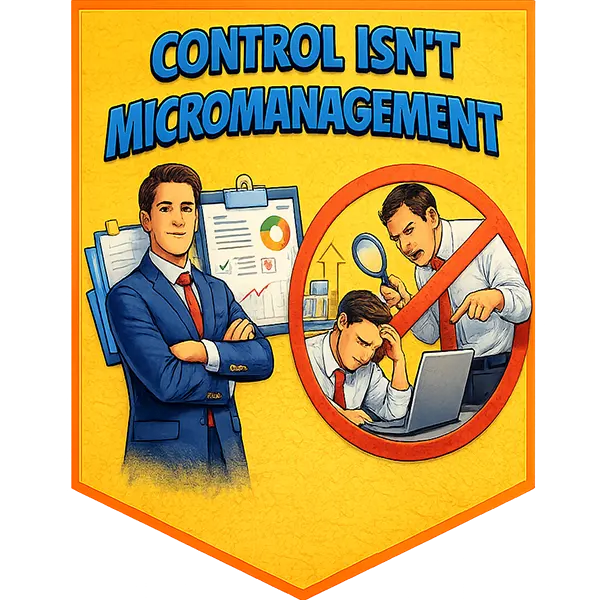
There’s a common misconception that remote work—especially with offshore teams—demands tighter control or more micromanagement. That you need to watch people more closely, check in more often, and generally trust less.
This is exactly backwards.
Remote work doesn’t demand tighter control or micromanagement. It demands clearer systems.
When systems are clear, you can actually manage less. People know what to do, how to do it, and what success looks like. They can make decisions, solve problems, and move projects forward without constant intervention.
The irony is that companies with poor structure tend to micromanage because they feel like they have no choice—nothing will get done otherwise. But that micromanagement never fixes the underlying problem; it just makes everything slower and more frustrating for everyone involved.
Clear systems create the foundation for autonomy. And autonomy is what allows offshore teams to deliver exceptional value.
When You Should Start Paying Attention
This is one of those things you notice when team members start moving tasks around without any ownership.
You look at your project management tool and see that a task has been reassigned three times, or marked complete and then reopened, or stuck in “in progress” for two weeks with no actual progress. Nobody seems to know who’s really responsible, what the blocker is, or when it will actually get done.
That’s your signal. That’s when you know that structure is missing and problems are brewing.
Other warning signs include:
- The same questions getting asked repeatedly
- People waiting on you for decisions they should be able to make
- Work getting done but not moving the needle on business results
- Quality issues that keep repeating despite addressing them
- Team members who seem disengaged or confused about priorities
Any of these symptoms point back to the same root cause: insufficient structure.
How to Build Structure Before It’s Too Late
If you’re recognizing these patterns in your own offshore team (or considering building one), here’s the good news: structure can be built at any point. It’s never too late, though it’s certainly easier to do it right from the start than to retrofit it later.
Start by asking yourself these questions:
About Roles:
- Can every team member clearly articulate what they’re responsible for?
- Is there any overlap or confusion about who handles what?
- Are there gaps—important responsibilities that nobody clearly owns?
About Processes:
- Could someone new understand how work flows through our team?
- Are our expectations and standards documented anywhere?
- When someone isn’t sure how to handle something, where do they look?
About Outcomes:
- Do we define success criteria before starting projects?
- Does “done” mean the same thing to everyone?
- How do we know if quality standards are being met?
About Communication:
- Is our communication mostly reactive (only when problems happen)?
- Do we have regular rhythms for alignment and feedback?
- Does everyone know when and how they’ll get input on their work?
About Ownership:
- For each major area of work, is one person ultimately responsible?
- When something goes wrong, can we quickly identify who owns the fix?
- Do people feel personally invested in outcomes, or just completing tasks?
Your honest answers to these questions will show you exactly where to focus your structure-building efforts.
The Bottom Line: Structure Is the Difference
Offshore teams represent an incredible opportunity for businesses. Access to global talent, significant cost savings, the ability to build teams that work around the clock across time zones—these advantages are real and substantial.
But they only materialize when structure is in place.
Without structure, offshore teams become a source of frustration, wasted investment, and missed opportunities. You’ll cycle through talent, add more people trying to fix problems, and eventually conclude that offshore just doesn’t work for your business.
With structure, those same teams become force multipliers. They allow you to scale faster, operate more efficiently, and compete with much larger companies—all while keeping costs under control.
The difference isn’t the people you hire or where they’re located. It’s whether you’ve built the framework that allows any team—co-located or distributed—to do their best work.
Remote work doesn’t demand that you become a more hands-on manager. It demands that you become a better systems builder.
And that’s a skill that will benefit every aspect of your business, whether your team is sitting in the next room or halfway around the world.
Ready to build the structure your offshore team needs to succeed? Contact Centric Prime to learn how we help companies create the frameworks, processes, and systems that turn distributed teams into high-performing powerhouses. Let’s make your offshore team the competitive advantage it should be.