

Many owners of small and mid-sized businesses find the notion of scaling to be unexpectedly straightforward. When deadlines start to pile up and the workload grows, it’s normal to think, “We need more hands on deck.” The formula sounds straightforward enough: more people = more labor, right? However, the unsettling reality that most entrepreneurs learn too late is that this kind of thinking is one of the main causes of promising companies reaching a dead end and ceasing to expand at all. We’ve seen something significant after assisting dozens of businesses in navigating the difficult waters of expansion. The majority of companies don’t fail because their employees lack skill, commitment, or a strong work ethic. Because their core structure—the framework that keeps everything together—is just not prepared to withstand development; they struggle and ultimately collapse. It’s similar to attempting to add more floors to a house without first making sure the foundation can support the increased weight. Something is going to fall apart eventually.
The All-Too-Common Scaling Trap That Catches Most Founders
This pattern appears repeatedly, almost like clockwork: First, the amount of work begins to accumulate. Previously completed projects now take longer to complete. Requests from customers wait in line for a little too long. The quality you take such care in begins to deteriorate gradually; it’s not catastrophic yet, but it’s enough to alarm you. The founder—perhaps you—then begins to feel incredibly tightly compressed. You’re juggling a lot of tasks, putting out fires, answering questions from your current team, attempting to satisfy customers, and in some way trying to think strategically about the company’s future. Even if you’re working longer hours than before, it seems like you’re not doing as much. So, what comes next? Hiring occurs—and happens rapidly. The strain is rising, and hiring new workers seems like the obvious solution. Perhaps you recruit the assistant you’ve been considering, bring on another salesperson, or expand your operations staff. But then something unexpected and frustrating occurs. Suddenly, supervising all of these individuals takes longer than completing the work yourself used to. You’re in back-to-back meetings explaining processes, answering questions, settling team member issues, and attempting to keep everyone on track and heading in the same direction. At that stage, growth doesn’t seem lighter, but heavier. Much heavier. And here’s the thing: it’s not a headcount issue. It is not about having too many or the wrong people. It boils down to a lack of clarity. When there is no organization, adding more personnel only leads to disarray.
Why Adding More People Often Creates More Chaos Instead of Solutions
When roles, responsibilities, and workflows are not clearly defined before to hiring, each new team member adds friction to your operations rather than eliminating them. Consider what occurs in the following situations: Overlapping obligations occur when two people believe they are both responsible for the same task—or, worse, thinking someone else is. Ownership becomes ambiguous, so when something goes wrong or isn’t completed, no one is held accountable. You can’t figure out who dropped the ball because it was never clearly assigned in the beginning. Your team members are constantly asking questions because they aren’t sure what they should be doing or how to do it. They require assistance with seemingly simple processes because they were never documented or thought through. Bottlenecks form around you, the founder, which is very frustrating. Every decision, permission, and clarification must go through you since you are the only one who truly understands how everything is meant to function. Instead of freeing up your time, your new employees have made you more important to everyday operations than ever before. Instead of increasing output and productivity, the firm expands disarray, miscommunication, and inefficiency. Working with remote teams makes this dynamic much more dangerous and costly. Without sufficient organization, remote employment can rapidly increase misalignment. Time zones cause communication delays. Cultural differences might cause misunderstandings. Because of the lack of in-person connection, minor issues can quickly escalate. But here’s the thing: with the appropriate structure in place, remote teams may outperform typical in-office setups—and at a far lower cost. The difference is not in the people or their location. It comes down to whether you’ve created the foundation for them to succeed.
What Real, Sustainable Scaling Actually Looks Like
True scale—the kind that seems manageable and sustainable rather than chaotic and overwhelming—does not result from adding people to your organizational chart. It results from systematically lowering friction in the way work is done. That entails being absolutely clear on a few essential elements: Clear roles mean that everyone knows who owns what. There is no doubt regarding who is in charge of client communication, project technical aspects, financial management, or quality control. Each person has a certain domain in which they hold power and knowledge. Clear ownership means that everyone knows who is ultimately responsible for specific outcomes. When a project succeeds or fails, when a client is pleased or unhappy, when income exceeds or falls short of expectations, there is always a clear individual who is accountable for the outcome. This is not about assigning blame; rather, it is about empowering and accepting responsibility. Clear workflows mean that everyone understands how work progresses from beginning to end. What are the steps? What happens first? Second? Third? Who hands off to whom? What exactly does “completed” look like? When these things are documented and understood, work flows more smoothly rather than getting bogged down in confusion and endless back and forth. When this structure is correctly in place, something nearly magical occurs: a smaller, leaner workforce may perform at extraordinary efficiency. They can move faster, produce higher-quality work, and expand the business without sliding into pandemonium. You don’t need a large number of team members to scale. You require a well-structured one.
The One Question Founders Should Ask Themselves Before Hiring
Before posting a position or contacting a recruiter, consider a different question: “Do we need more people?”Do we have a mechanism that enables successful delegation?” Because we’ve discovered that if delegation isn’t built into your structure—if you don’t have clear processes, defined responsibilities, and documented workflows—hiring more people will simply increase your dependency, not decrease it. Every new recruit will need you to guide them, answer their questions, examine their work, and make judgments that they should be able to make on their own. You will be more important than ever, not less. The purpose of hiring should be to gain leverage—to double what you can accomplish. However, without the right structure, it only adds weight to your shoulders.
How Centric Prime Helps Businesses Scale the Right Way
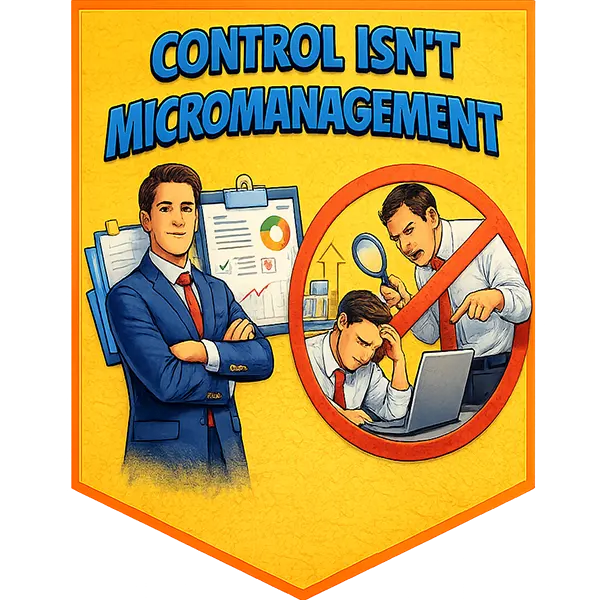
At Centric Prime, we’ve witnessed firsthand how difficult and expensive it is to scale without structure. We’ve also witnessed how revolutionary it is when businesses get this properly. That is why we do more than simply assist businesses in hiring remote workers. Anyone can help you find people. What we do is essentially different: we assist you in establishing the structure that ensures effective and sustainable hiring. Here’s how it looks in practice: Prior to beginning the recruitment process, we define roles. We collaborate with you to define the specific tasks, abilities, and success criteria for each role. This guarantees that when we do recruit someone, they understand exactly what they will be doing. We prioritize pairing people with clear, well-defined roles. It is not enough to locate talented workers; it is also necessary to identify the proper people for specialized tasks in which they may succeed and take responsibility. We want candidates with the experience and mindset to succeed in controlled workplaces where they can work autonomously. We encourage the creation of workflows that facilitate true delegation. This could include assisting you with documenting your processes, developing standard operating procedures, or implementing project management solutions that provide visibility and accountability without requiring continual supervision. Perhaps most crucially, we help founders overcome daily impediments. Our goal is to make you less necessary for day-to-day operations, not more. We want you to focus your time on strategy, growth, and high-value activities that only you can do, rather than answering basic queries or micromanaging details that your team should manage. What is the result of this approach? Leaner teams achieve more. Costs are significantly reduced as compared to traditional hiring. And growth that feels controlled, planned, and sustainable, rather than chaotic and overpowering.
Final Thought: Structure First, Hiring Second
If there is one takeaway from this, it is that scaling does not result from hiring faster or adding more people to your payroll. It begins with the creation of a framework, followed by the recruitment of the appropriate individuals to work within that organization. Because true, long-term growth isn’t determined by the number of people you hire. It’s about how well your system supports, empowers, and enables them to perform their best work without continual supervision. If you get the framework right, you’ll be shocked at what a small, focused crew can accomplish. If you get it wrong, even a large team will struggle to move the needle. The choice is yours—but the road to successful scaling is more obvious than most people believe. It simply begins in a different place than expected: with structure, not headcount. Are you ready to scale your business the right way? Contact Centric Prime to learn more about how we can assist you in developing the structure and team that will enable longterm, profitable growth.